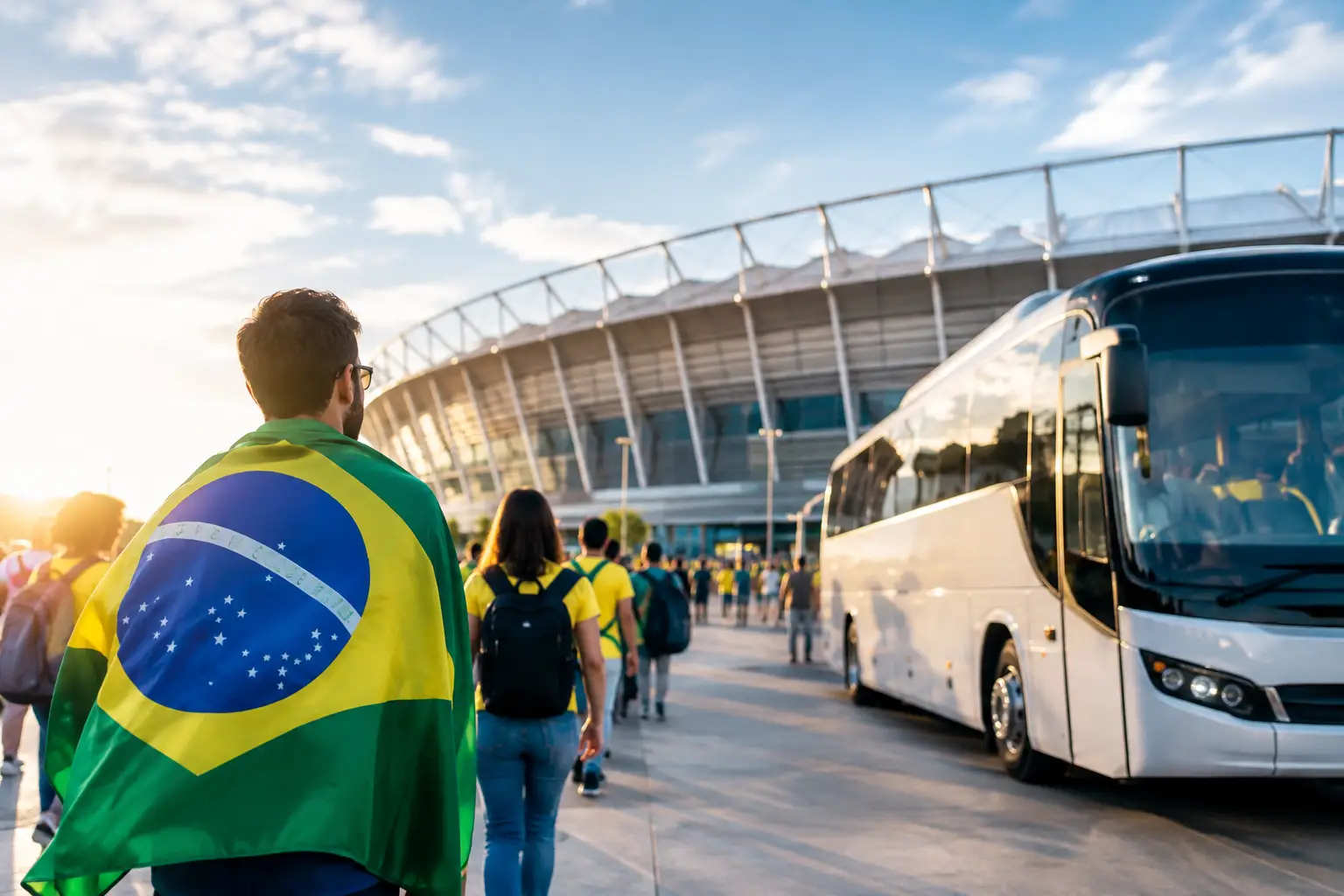
A World Cup itinerary can look simple on paper: arrive, attend the match, host clients, depart. During a tournament of this scale, every one of those movements becomes a live operational decision. World Cup transport trends point to a clear reality for executives, VIPs, and event planners: transportation is no longer a background booking. It is a core part of the guest experience, security posture, and business schedule.
The 2026 tournament distributed demand across multiple host markets. Airports, hotels, stadium corridors, private terminals, restaurants, and corporate venues experienced concentrated pressure. For travelers who cannot afford a missed kickoff, delayed meeting, or exposed arrival, professional chauffeured transportation provides structure where public event logistics can quickly become unpredictable.
World Cup Transport Trends Are Becoming More Strategic
The defining shift is from individual transfers to managed mobility. A single executive may arrive through one airport, attend matches in several cities, and require transportation for colleagues, clients, family members, or security personnel. Event planners may be moving groups with different schedules, credentials, vehicle requirements, and departure points.
That changes the standard for transportation. The question is not simply whether a vehicle is available. The question is whether every movement has been timed, monitored, staffed, and supported by a team that understands the full itinerary.
For premium travelers, this is especially relevant in New York. Manhattan remained a major base for international guests, corporate hospitality, media activity, and onward travel, even for matches held elsewhere in the region. Transfers involving JFK, LaGuardia, Newark Liberty, Teterboro, and private aviation facilities require disciplined coordination, particularly when flight schedules and road conditions change with little notice.
The itinerary is now the operating plan
During major sporting events, a flight landing time is only one piece of the plan. Baggage timing, terminal access, traffic restrictions, credentials, vehicle staging rules, hotel entrances, and venue security perimeters can affect a pickup. The same applies after the match, when large crowds leave in waves and designated vehicle zones may be outside the most obvious exit.
A professionally managed chauffeur service plans around those variables. That includes flight monitoring, precise pickup instructions, a properly selected vehicle, and dispatch support that can react if a guest is delayed or an itinerary changes. For a principal traveling with an executive assistant, this level of preparation protects both time and privacy.
Multi-City Travel Replaced the Single Transfer
The expanded tournament footprint makes multi-city coordination one of the most important World Cup transport trends. Guests may follow a team across host cities, combine matches with board meetings, or stage a hospitality program in more than one market. Managing each segment separately creates unnecessary friction: separate contacts, inconsistent service standards, fragmented billing, and no single party accountable for the whole journey.
A centralized chauffeur partner brings continuity. The traveler receives the same service expectations from arrival through departure, while the organizer has one point of contact for manifests, adjustments, confirmations, and invoicing. This matters most when plans are fluid. A late decision to add an airport transfer, extend a vehicle for dinner, or move a delegation to a different hotel should not require rebuilding the transportation plan from the ground up.
For corporate travel teams, consistency also supports duty of care. It is easier to confirm who is traveling, where they are expected to be, and which transportation team is responsible when the itinerary is managed through one coordinated operation.
Vehicle selection has become more purposeful
Vehicle choice is no longer just a matter of preference. It directly affects comfort, productivity, luggage capacity, arrival presentation, and operational flexibility.
A luxury sedan or SUV may be ideal for a principal and a small executive party moving between an airport, hotel, and private dinner. An executive sprinter can be a stronger choice for a leadership team, family group, or client delegation that needs to remain together. For a larger hospitality program, motorcoaches may offer the most practical way to keep guests on schedule and reduce the number of separate arrivals at a venue.
The right answer depends on the group, route, and security expectations. Sending multiple small vehicles can offer flexibility, but it also increases coordination points. A single larger vehicle simplifies the movement of a group, though it may require more careful staging near crowded venues. An experienced transportation team will make that distinction early, not while guests are waiting outside.
Privacy and Security Are Part of the Service Standard
A global event attracts more than fans. It brings public figures, corporate leaders, diplomatic guests, athletes, media personalities, and high-profile families into the same high-traffic spaces. Visibility rises, and so does the value of a discreet arrival and departure plan.
Privacy begins with the fundamentals: professionally trained chauffeurs, well-maintained vehicles, clear client communication, and the ability to manage pickups without unnecessary attention. It also requires sound judgment. A chauffeur should understand when to wait, where to stage, how to handle a changed exit point, and when to involve dispatch rather than creating confusion for the client.
For select clients, security requirements may call for enhanced coordination, protected vehicle options, or closely managed movements between private aviation, hotels, and venues. These arrangements should be addressed well before the travel date. The closer an event gets, the more limited the operational options become.
Flexible Scheduling Mattered More Than Fixed Timetables
Match schedules are fixed. Everything around them is not. Flights are delayed, meetings run long, weather affects travel, guests decide to continue an evening, and security protocols alter access routes. The transportation plan must be firm enough to keep the day moving while flexible enough to absorb change.
This is why hourly chauffeur reservations often make sense during tournament travel. Rather than estimating every stop to the minute, the vehicle and chauffeur remain available for a defined period. That gives a client the freedom to adjust a lunch location, add a meeting, leave a venue later, or change the order of appointments without starting a new reservation each time.
Point-to-point service remains effective for clearly defined airport transfers and scheduled arrivals. The trade-off is less flexibility if the itinerary expands. For high-value guests with packed calendars, keeping a dedicated chauffeur on standby can be the more controlled choice.
Dispatch visibility is a competitive advantage
Behind a polished pickup is a dispatch operation that tracks details most passengers never need to see. During a World Cup period, that may include monitoring flights, communicating with chauffeurs, confirming changing pickup instructions, coordinating multiple vehicles, and anticipating traffic around major event windows.
The difference becomes apparent when plans change. A transportation provider that operates only one reservation at a time may struggle when a group splits, a flight diverts, or a dinner ends unexpectedly. A provider with around-the-clock dispatch and broad market reach can rework the plan without placing the burden on the traveler or executive assistant.
Book Earlier, Then Keep Reviewing the Plan
Premium transportation capacity tightens quickly around major events, especially for executive sprinters, specialty vehicles, motorcoaches, and high-demand airport periods. Early booking protects access to the appropriate vehicle category and allows time to build a precise plan. It also creates room for site considerations, group manifests, special requests, and contingency planning.
Early booking should not mean a plan is left untouched. The strongest event transportation programs are reviewed as flight schedules, guest lists, venue instructions, and hospitality plans become final. A transportation brief prepared months ahead may need meaningful adjustments in the final week.
For organizers managing a full tournament schedule in New York City, NYC Drivers can coordinate executive airport transfers, hourly chauffeur service, and group transportation across New York City and the Tri-State area through one professionally managed account. The goal is not simply to move guests between locations. It is to protect the schedule, preserve the experience, and maintain the discretion expected at this level.
The best World Cup transportation plan felt almost invisible to the people using it. Guests should step from aircraft to vehicle, from vehicle to venue, and from venue to their next engagement with confidence that every detail has already been handled.
Leave a Reply