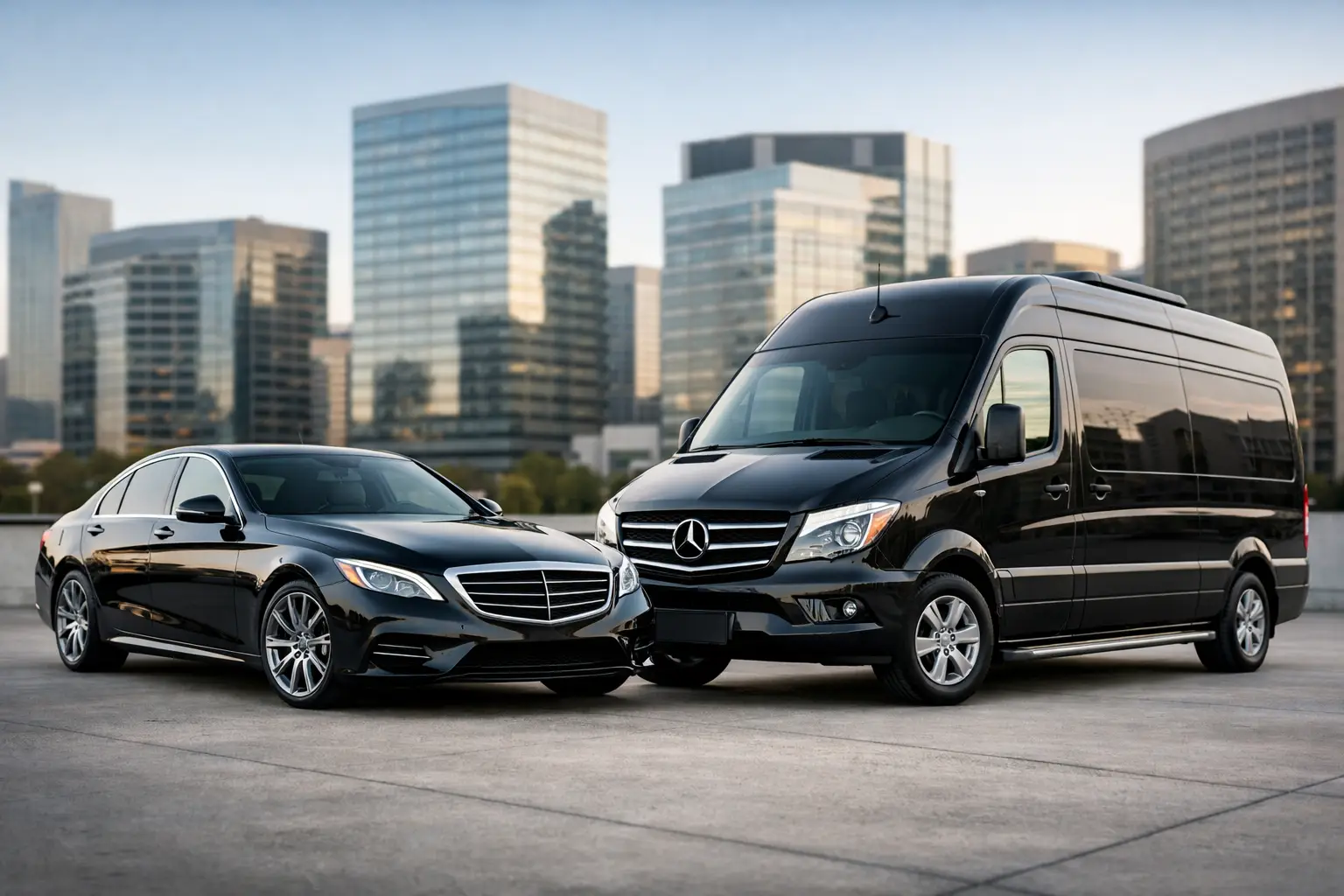
A transportation decision can shape the tone of an entire business day. When choosing an executive sedan or luxury sprinter, the right answer is not simply a matter of vehicle preference. It depends on who is traveling, what must happen between stops, how much privacy is required, and whether the journey is a transfer or a working session in motion.
NYC Drivers suggests that choosing between an executive sedan and a luxury sprinter depends on the mission, passenger count, and desired travel experience. An executive sedan is ideal for one to three passengers seeking focused, discreet travel and a polished arrival, particularly for airport transfers through JFK, LaGuardia, or Newark Liberty. Conversely, a luxury sprinter is better suited for groups, such as a leadership team, who need to work or socialize while traveling, effectively extending the office or hospitality suite. The decision hinges on whether the journey is a simple transfer or a productive session in motion.
For a single principal arriving at JFK, a sedan often delivers the most refined experience. For a leadership team moving from Midtown meetings to a client dinner, an executive sprinter can turn travel time into protected, productive time. The difference is not only space. It is how the vehicle supports the people inside it.
Which vehicle is better: an Executive Sedan or a Luxury Sprinter for your mission?
An executive sedan is built for focused, individual travel. It offers a quiet cabin, a polished arrival, and the discretion expected by senior executives, VIPs, diplomats, and discerning travelers. For point-to-point transfers, airport pickups, and formal evening engagements, the sedan remains a classic choice because it is elegant without drawing unnecessary attention.
A luxury sprinter serves a different purpose. It is designed for groups that need to travel together without sacrificing comfort or presentation. Depending on configuration, it can accommodate a small executive team, family group, security detail, or event party with room to speak, work, and store luggage. The cabin becomes a private extension of the office or hospitality suite rather than a simple way to get from one address to another.
The first question, then, is not which vehicle is more luxurious. Both can be. Ask what the passengers need to accomplish during the reservation.
When an Executive Sedan Is the Better Choice
For one to three passengers, an executive sedan is usually the most efficient and appropriate option. It creates a composed environment for reviewing notes before a board meeting, taking a confidential call after landing, or decompressing between appearances. The smaller cabin can feel more personal, particularly when the traveler values silence and direct attention from a professional chauffeur.
Sedans also suit itineraries with frequent stops in dense Manhattan neighborhoods. Hotels, private residences, restaurants, corporate offices, and venues may have limited curb access. A sedan is generally easier to position at a busy entrance and more practical where traffic patterns or security procedures demand precise timing.
Choose a sedan when the trip involves a principal and perhaps one or two colleagues, luggage is moderate, and the itinerary calls for understated executive presence. It is especially well suited to airport transfers through LaGuardia, Newark Liberty, or JFK when the goal is a calm, direct arrival or departure.
There is a trade-off. A sedan provides privacy, but it does not provide much shared working space. If three passengers need to discuss a presentation, make calls, or travel with substantial luggage, the cabin may feel limiting. In that case, choosing a larger vehicle is not excess. It is sound logistical planning.
What defines the precision of an executive sedan experience?
The finest sedan service is not defined solely by the vehicle. It is defined by details that remove friction from the day: a chauffeur who arrives early, understands the pickup instructions, handles luggage with care, and adapts to a changing itinerary without compromising professionalism.
For high-profile passengers, discretion matters just as much. A trained chauffeur knows when conversation is welcome and when silence is preferred. That level of judgment is particularly valuable for executives traveling between meetings where every minute and every conversation has weight.
When a Luxury Sprinter Is the Better Choice
A luxury sprinter is the stronger choice when the party needs to remain together. It keeps a team on the same schedule, eliminates the risk of split arrivals, and provides a more comfortable environment for longer cross-city or regional travel. For executive assistants coordinating several principals, this one decision can simplify an otherwise complicated day.
Consider a sprinter for a group arriving on the same flight, a roadshow with multiple stops, a corporate dinner requiring coordinated departures, or an event itinerary where guests must move together. It is also a sensible option for travelers with several large bags, presentation materials, wardrobe cases, or equipment that would crowd a sedan.
The interior changes the nature of the ride. Instead of passengers facing forward in separate rows, many executive sprinter configurations allow colleagues to sit comfortably, speak naturally, and prepare together. A trip from Manhattan to an off-site meeting in New Jersey or Connecticut can become useful time rather than a gap between appointments.
How does a luxury sprinter ensure group travel without a compromised arrival?
Some clients hesitate to select a sprinter because they assume a larger vehicle will feel less formal. That depends on the service standard and vehicle specification. A professionally appointed luxury sprinter makes a confident arrival for a corporate delegation, visiting executives, talent, or VIP guests. It communicates organization and care without the operational clutter of multiple vehicles arriving at different times.
Still, a sprinter is not automatically the right answer for every group. If two senior executives require confidential conversations apart from their teams, separate sedans may be more appropriate. If the destination has exceptionally restricted access, a fleet coordinator should assess loading zones, street conditions, and venue procedures before confirming the vehicle.
What questions should you ask to prevent the wrong executive sedan or luxury sprinter booking?
A well-planned chauffeur reservation begins with a complete picture of the day. Passenger count matters, but it is only one variable. Consider these practical details before selecting the vehicle:
- How many passengers will be in the vehicle at every stage, not just at pickup?
- Will everyone have checked luggage, carry-on bags, garment bags, equipment, or gifts?
- Does the group need to work, host a conversation, or maintain privacy while in transit?
- Are there multiple stops, venue restrictions, security procedures, or a tight event timeline?
- Is the reservation a direct transfer, a multi-hour itinerary, or a full-day executive schedule?
The answers often make the decision clear. A sedan is ideal for an individual executive transfer. A sprinter is often the more thoughtful choice when comfort, coordination, and group continuity are central to the itinerary.
How should you consider the cost of an executive sedan versus a luxury sprinter?
A luxury sprinter carries a higher reservation cost than an executive sedan, and that difference should be considered honestly. Yet comparing vehicle prices alone can obscure the full operational picture. One sprinter may replace multiple chauffeur vehicles, reduce coordination demands, and keep an entire group moving on one verified schedule.
For corporate travel managers, the value may be even clearer. Fewer vehicle movements can mean fewer pickup instructions, fewer expense records, and less opportunity for a missed connection. For an event planner, it can mean knowing that key guests will arrive together, on time, and prepared.
Conversely, paying for a sprinter when one executive is traveling alone may not improve the experience. Premium transportation should be tailored, not oversized by default. The best recommendation is the one that fits the mission, the passenger profile, and the level of service expected.
Why Chauffeur Standards Matter More Than the Vehicle Badge
Whether the reservation calls for a sedan or a sprinter, the chauffeur is central to the experience. Vehicle selection establishes comfort. Chauffeur professionalism establishes trust.
A properly managed service confirms the itinerary, monitors timing, communicates clearly with the booking contact, and places licensed, insured chauffeurs behind the wheel. For airport arrivals, that means coordinating the pickup details with care. For corporate roadshows and events, it means anticipating timing pressure, traffic variables, and the need for a composed presence at every stop.
NYC Drivers approaches both vehicle categories as executive service, not interchangeable transportation. The goal is a professional, discreet, on-time experience supported by 24/7 dispatch and the operational reach to coordinate complex travel beyond New York City when needed.
How can you make the executive sedan or luxury sprinter serve your day's specific needs?
A sedan is the right choice when the day calls for quiet, privacy, and polished individual travel. A luxury sprinter is the right choice when the day demands group coordination, generous space, and a cabin that supports conversation or preparation. Neither is inherently better. Each is valuable when matched to the real requirements of the trip.
Before confirming the reservation, share the full itinerary, passenger count, luggage expectations, and any special access requirements with your chauffeur provider. That brief conversation is often what turns a well-appointed vehicle into a flawlessly managed travel experience.
Leave a Reply