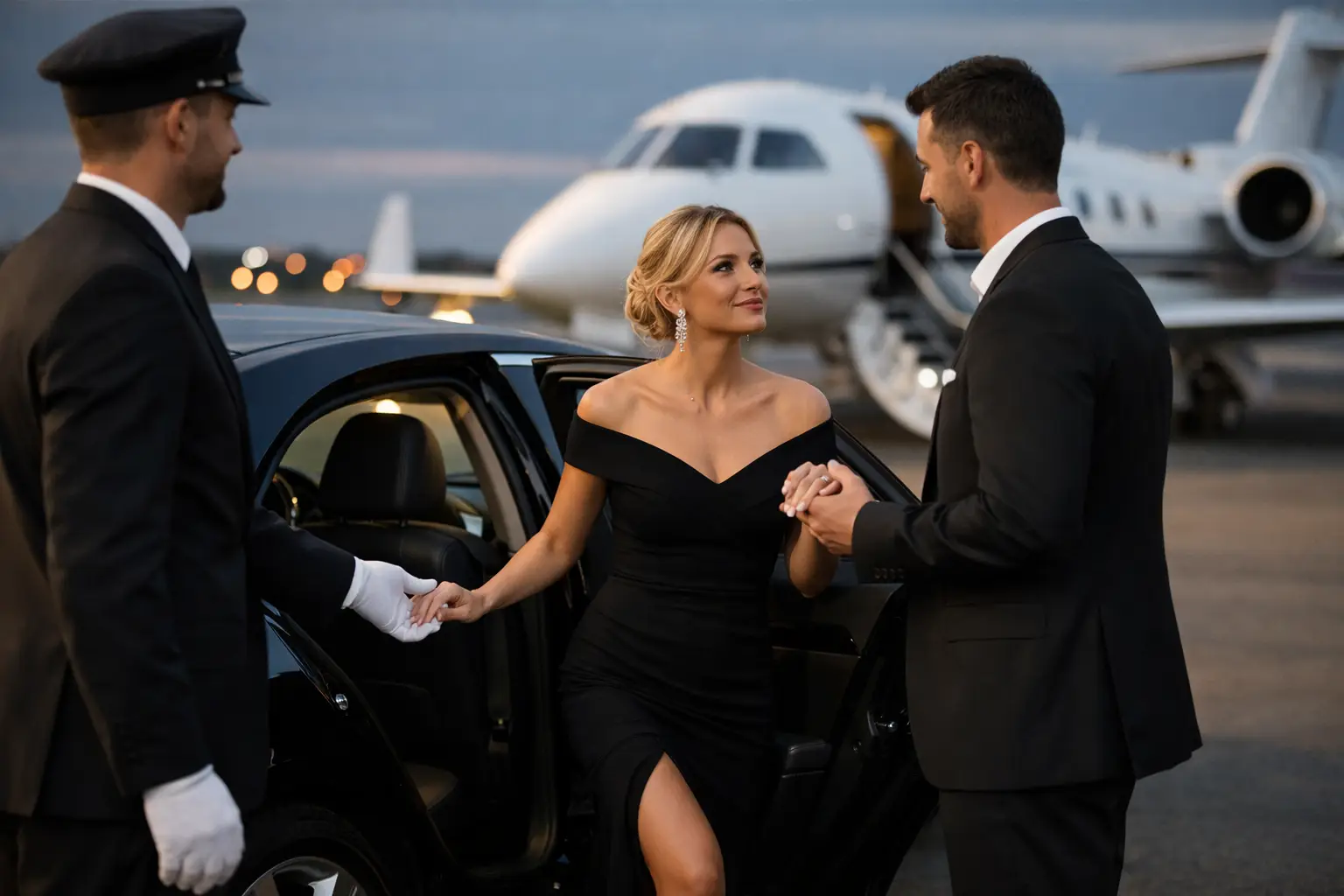
A gala can be flawless inside the venue and still feel poorly managed the moment a principal waits at the curb. That is why VIP event transportation is never a minor detail. For executive teams, event planners, and private clients, the vehicle, the chauffeur, the timing, and the communication all shape the guest experience before the first handshake and after the final toast.
At the VIP level, transportation is part logistics, part hospitality, and part risk management. It has to look polished, but appearance alone is not enough. The service must be precise under pressure, flexible when schedules change, and discreet when the guest list includes public figures, board members, or high-net-worth travelers. When the stakes are high, transportation should feel calm because the operation behind it is disciplined.
What VIP event transportation really includes
VIP event transportation is not limited to taking a guest from one address to another. In practice, it often involves layered planning around arrivals, departures, security, venue access, traffic patterns, staging, and backup timing. A single event may require airport pickups for out-of-town executives, dedicated sedans for keynote speakers, sprinters for staff movement, and larger vehicles for group transfers.
The complexity rises quickly when there are multiple principals, changing run-of-show details, or several event touchpoints in one day. A board dinner might begin with airport arrivals, continue with hotel transfers, move to a private dining room, and end with individualized returns. An awards night may require staggered arrivals, curbside coordination, and chauffeurs who can remain in close contact with assistants and event leads throughout the evening.
That is why experienced clients do not buy transportation by vehicle alone. They are buying control, consistency, and confidence that no part of the schedule will unravel because of poor execution.
Why event transportation fails
Most transportation problems do not start on the road. They start in planning. Pickup windows are too tight. Guest manifests are incomplete. Venue access rules are not confirmed. The wrong vehicle type is assigned to the wrong passenger count or luggage requirement. Contact chains are unclear, so small changes become large delays.
For VIP clients, another common issue is the gap between promised service and operational reality. A provider may present itself well but struggle with dispatch discipline, chauffeur standards, or multi-vehicle coordination. That difference matters most during high-visibility events, where there is no room for confusion at the curb.
Traffic, weather, and last-minute changes are part of the business. They are not excuses. The real question is whether the transportation team has the systems and experience to adjust without exposing the client to stress. That is where premium chauffeur service separates itself.
The standards that define premium VIP event transportation
A serious transportation partner begins with chauffeur quality. For VIP work, professionalism is not limited to safe driving. Chauffeurs must understand timing, etiquette, confidentiality, and communication. They need to be polished in appearance, restrained in demeanor, and capable of adapting to executive preferences without being intrusive.
Vehicle condition matters just as much. Cleanliness, presentation, climate control, interior comfort, and fleet consistency all affect the impression left on the passenger. A luxury sedan may be ideal for a CEO or principal attendee, while an executive sprinter may better serve a traveling team, family office, or security detail. The right choice depends on the guest profile, the route, and the level of privacy required.
Dispatch oversight is another defining standard. High-level event transportation should not rely on the chauffeur alone to manage changes. A professional dispatch team monitors timing, tracks route conditions, coordinates with on-site contacts, and supports schedule updates in real time. That operational layer is often what keeps a demanding event moving smoothly.
Matching the vehicle plan to the event
Not every VIP event calls for the same fleet strategy. A film premiere, investor roadshow, diplomatic visit, and private wedding all have different movement patterns. The most effective approach starts with the event agenda, then builds transportation around the guest experience.
For individual principals, a luxury black car with a dedicated chauffeur is often the clearest choice. It offers privacy, direct routing, and a controlled environment between stops. For executive teams or family groups, an SUV or executive sprinter can reduce fragmentation and make coordination easier. For larger guest blocks, motorcoaches may be appropriate, especially when arrivals must be synchronized.
There is always a balance between efficiency and personalization. Consolidating guests can simplify logistics, but some passengers need separate service because of rank, security concerns, media visibility, or scheduling differences. A well-managed plan recognizes where grouping creates value and where individual service is non-negotiable.
VIP event transportation in New York requires more than local knowledge
New York presents its own pressures. Venue congestion, limited curb access, high-profile arrivals, and compressed travel windows can challenge even the best event schedule. In Manhattan especially, a beautiful itinerary on paper means little unless the transportation plan reflects real street conditions and practical staging options.
This is where experience in VIP event transportation becomes especially important. The team managing the service must understand how to work around hotel loading rules, private club access points, theater district traffic, and airport timing from JFK, LaGuardia, Newark, Teterboro, or Westchester when private and commercial arrivals are part of the event flow.
For clients managing guests across several cities, local expertise must also connect to broader operational reach. One account, one standard, and one invoice can remove a surprising amount of friction for executive assistants and travel managers coordinating complex programs.
What event planners and executive assistants should confirm early
The best VIP transportation plans are built well before the first pickup. That starts with passenger priorities. Who must arrive first, who requires dedicated service, who has security considerations, and who may need flexibility beyond the published schedule? When those answers are clear, vehicle assignments become more accurate.
It is equally important to confirm luggage expectations, exact passenger counts, and on-site contacts. An airport arrival for a speaker traveling alone is different from one arriving with colleagues, wardrobe cases, or production materials. Small details influence vehicle selection and timing more than many clients expect.
Communication structure should be defined early as well. There should be one clear lead on the client side and one clear operations contact on the transportation side. If updates are moving through too many people, delays and mistakes become more likely.
Discretion is part of the service
For celebrities, diplomats, family offices, and senior executives, discretion is not an added luxury. It is a baseline expectation. Chauffeurs should know how to maintain privacy, avoid unnecessary conversation, and handle public-facing pickups with composure. They should understand that the client relationship depends as much on judgment as on driving skill.
This is also why professional standards and insurance matter. VIP clients are not simply looking for polished vehicles. They want the assurance that the service is licensed, properly managed, and backed by a team that treats safety and confidentiality as operational priorities.
Providers such as NYC Drivers have built their reputation on that combination of luxury presentation and disciplined execution. For clients moving between New York and other major markets, that consistency is often what matters most.
The real value of getting it right
When VIP event transportation is handled properly, the event feels more controlled at every stage. Guests arrive composed. Hosts stay focused on the program instead of fielding curbside calls. Executive assistants spend less time troubleshooting. The brand or household behind the event appears organized, attentive, and credible.
That result is not about extravagance for its own sake. It is about protecting time, reputation, and the guest experience. In many cases, transportation is the first and last live touchpoint of the event. People remember whether it felt orderly, discreet, and professionally managed.
If you are planning a high-level event, treat transportation as part of the core production, not an afterthought. The right service partner does more than move passengers. They help the entire event hold its standard from the first arrival to the final departure.
Leave a Reply