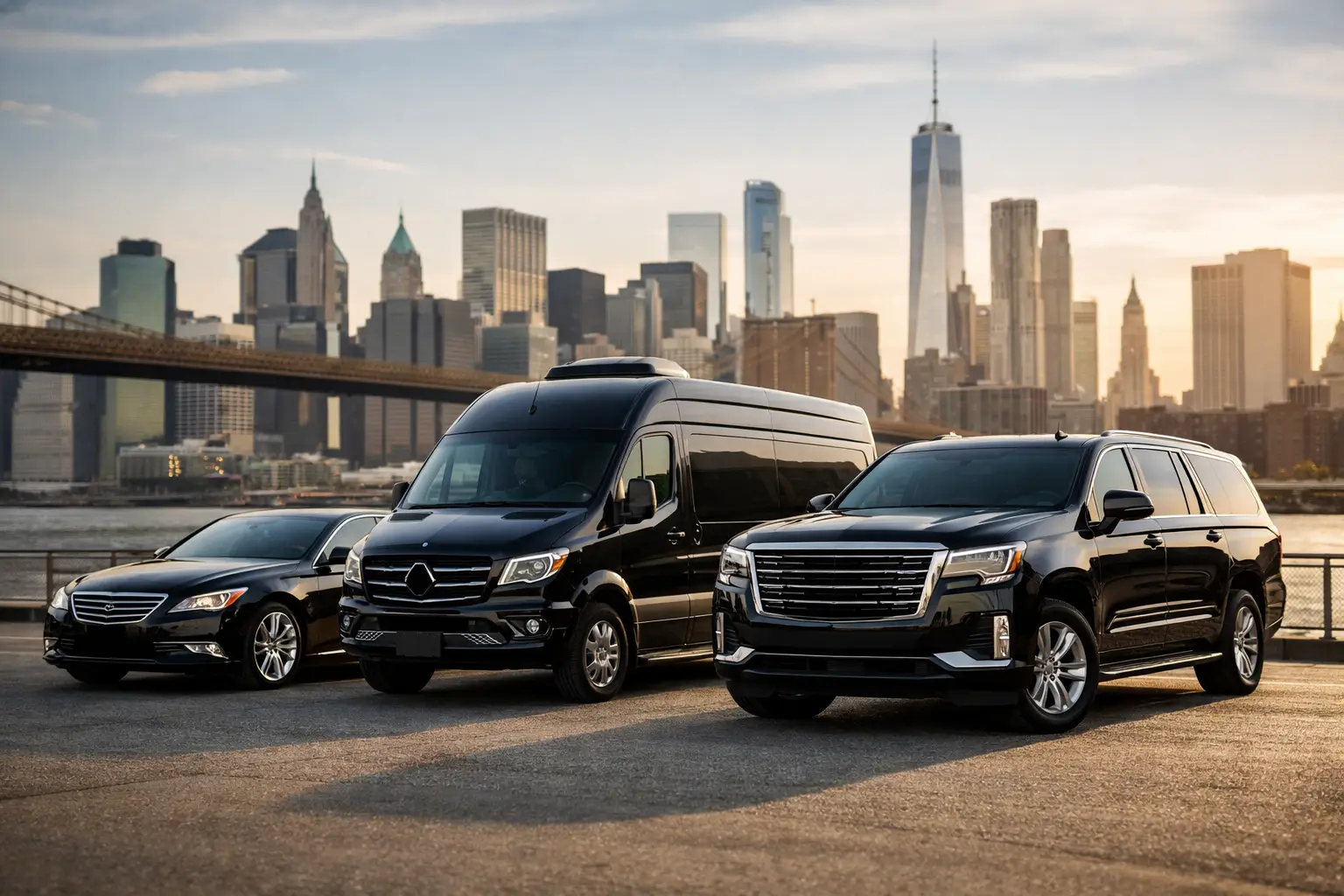
A corporate roadshow can be won or lost before the first presentation begins. When an executive arrives late, a client team is split across unfamiliar vehicles, or luggage and display materials have no secure place to go, the day feels disorganized. The best vehicles for corporate roadshows do more than move people between meetings. They create a calm, private, on-time environment that protects the schedule and reflects the standards of the organization hosting it.
For decision-makers, executive assistants, and event planners, vehicle selection should begin with the roadshow’s operating reality: passenger count, number of stops, equipment requirements, travel distance, and the level of privacy expected. A polished fleet plan also needs professional chauffeurs, live dispatch support, and enough flexibility to absorb a meeting that runs long or an unexpected change in venue.
Start With the Roadshow, Not the Vehicle
There is no single right vehicle for every corporate roadshow. A one-day Manhattan investor itinerary has different demands than a multi-market product launch or a client hospitality program traveling between New York City, New Jersey, and Connecticut.
Start by identifying who must travel together. Senior executives often benefit from a dedicated vehicle, allowing them to prepare, take calls, and arrive without unnecessary transitions. Sales teams, production staff, and guests may need separate transportation based on their roles, departure times, and comfort expectations. Combining everyone into one vehicle may appear efficient, but it can create delays when one group has a different schedule.
Then assess what travels with them. Presentation cases, signage, samples, garment bags, camera equipment, and overnight luggage quickly change the vehicle requirement. The ideal choice is not simply the vehicle with the most seats. It is the vehicle that carries every passenger and essential item comfortably while preserving a refined arrival experience.
Executive Sedans for High-Stakes Individual Travel
A luxury executive sedan is the preferred choice when one to three senior travelers need discreet, direct transportation. It suits CEO roadshows, investor meetings, airport-to-office transfers, and tightly scheduled appointments where a principal should travel independently of the larger group.
The advantage is focus. A quiet cabin gives an executive room to review notes, make confidential calls, or pause between demanding meetings. A dedicated chauffeur also creates accountability around timing: one principal, one itinerary, and one professional responsible for each transition.
Sedans are less suitable when a roadshow involves substantial luggage, materials, or more than a small executive party. Trying to stretch their role beyond that point can compromise comfort and complicate loading at every stop. They are best deployed as part of a coordinated transportation plan, not as a catch-all solution.
Luxury SUVs for Small Teams and Flexible Schedules
For many corporate programs, a luxury SUV offers the strongest balance of capacity, comfort, and versatility. It can accommodate a small executive group while allowing practical space for briefcases, carry-on luggage, display materials, or event supplies.
Luxury SUVs are particularly effective for roadshows that include airport arrivals, multiple venues, and travel outside dense urban cores. They provide an elevated travel experience without the operational footprint of a larger vehicle. For a leadership team of three to five passengers, an SUV often keeps everyone together while maintaining the privacy and composure expected in executive transportation.
The trade-off is simple: SUVs work well for compact groups, but they can become crowded when every passenger has luggage or equipment. A group that technically fits may not travel well. A transportation coordinator should plan for real-world cargo, not just stated passenger capacity.
Executive Sprinters for Mobile Meetings and Team Travel
When six to 13 passengers need to travel together, the executive sprinter is often the most practical roadshow vehicle. It provides the space and comfort that a collection of smaller vehicles cannot always match, particularly when the group needs to coordinate closely between stops.
An executive sprinter is well suited to leadership off-sites, sales roadshows, board itineraries, media tours, and multi-stop client programs. The cabin allows colleagues to remain together, discuss the next meeting, and keep the day moving as a unified team. It also provides more room for luggage and event materials than sedans or SUVs.
This format works best when the group has one shared itinerary. If several attendees have separate meetings, flights, or hotel schedules, a sprinter alone can become restrictive. In that case, pair it with a dedicated sedan or SUV for the principal whose movements must remain independent.
For a roadshow with presentations at several sites, consider the value of a vehicle that doubles as a controlled transition space. The minutes between appointments are often where teams regroup, review feedback, and prepare for the next room. That continuity is difficult to replicate when guests are distributed across multiple cars.
Mini Coaches and Motorcoaches for Larger Delegations
A mini coach or motorcoach is the right answer when the roadshow includes a larger delegation, employee group, customer audience, or visiting team. It is particularly valuable for conferences, corporate site visits, product demonstrations, hospitality programs, and events where moving attendees in one coordinated wave matters more than individual flexibility.
The benefits extend beyond seating capacity. Centralized transportation simplifies departure control, reduces missed pickups, and ensures guests arrive together. For event planners, it also creates a more consistent guest experience from the hotel or airport through to the venue.
Larger vehicles require more advance operational planning. Urban access, curb space, loading zones, venue approach routes, and timing should all be reviewed before the event. In Manhattan especially, a coach should be scheduled with a clear plan for staging and pickup. Experienced dispatch coordination matters because a large vehicle cannot simply wait indefinitely at every address.
Specialty Vehicles Have a Role, but Only When They Serve the Program
High-end specialty vehicles can elevate certain roadshows, but they should have a clear purpose. An exotic vehicle may fit a luxury brand activation. An armoured vehicle may be appropriate for high-profile principals who require additional security considerations. A party bus may work for a controlled entertainment or hospitality component, though it is rarely the best choice for a formal business itinerary.
The standard should be strategic fit, not spectacle. Every vehicle should support the audience, the brand, and the day’s objectives. For most executive programs, understated luxury, discretion, and flawless timing make a stronger impression than excess.
What Separates a Premium Roadshow Fleet From a Collection of Cars
The vehicle itself is only half the decision. A corporate roadshow depends on the people and systems behind it. TLC-licensed chauffeurs, commercial insurance, professional appearance standards, and 24/7 dispatch are not optional details when senior leaders, clients, or VIPs are on the manifest.
Look for a provider that can manage changes without forcing your team to rebuild the plan. Flight delays, venue adjustments, added passengers, and extended meetings are common in corporate travel. The right transportation partner tracks the itinerary, communicates clearly, and adapts with discretion.
For programs spanning several cities, consistency becomes even more valuable. One account, one point of coordination, and one consolidated invoice reduce the administrative burden on executive assistants and travel managers. NYC Drivers can coordinate premium chauffeur service across New York City and a broad national and international network, allowing corporate teams to maintain the same service expectations beyond a single market.
Build the Fleet Around Roles, Not Just Head Count
The most effective roadshow plans frequently use a vehicle mix. A CEO may travel in a dedicated sedan or SUV, while the leadership team uses an executive sprinter and event personnel travel separately with materials. This structure protects executive time without leaving the broader group unsupported.
Think through arrivals and departures as carefully as the meetings themselves. If a team flies into JFK, LaGuardia, Newark, Teterboro, or Westchester County Airport, luggage volume and flight timing should influence the assignment from the outset. The same applies to late-night departures after a client dinner or a final presentation. A thoughtful plan prevents the last stop from becoming the weakest one.
Reserve appropriate vehicle capacity, confirm each passenger group’s itinerary, and provide the chauffeur team with venue contacts and timing priorities. Those details allow transportation to operate quietly in the background, which is exactly where it should be.
The right roadshow vehicle is the one that makes every arrival feel deliberate. When executives have space to prepare, guests travel comfortably, and every chauffeur is professional, discreet, and on time, transportation stops being a logistics concern and becomes part of the program’s credibility.
Leave a Reply