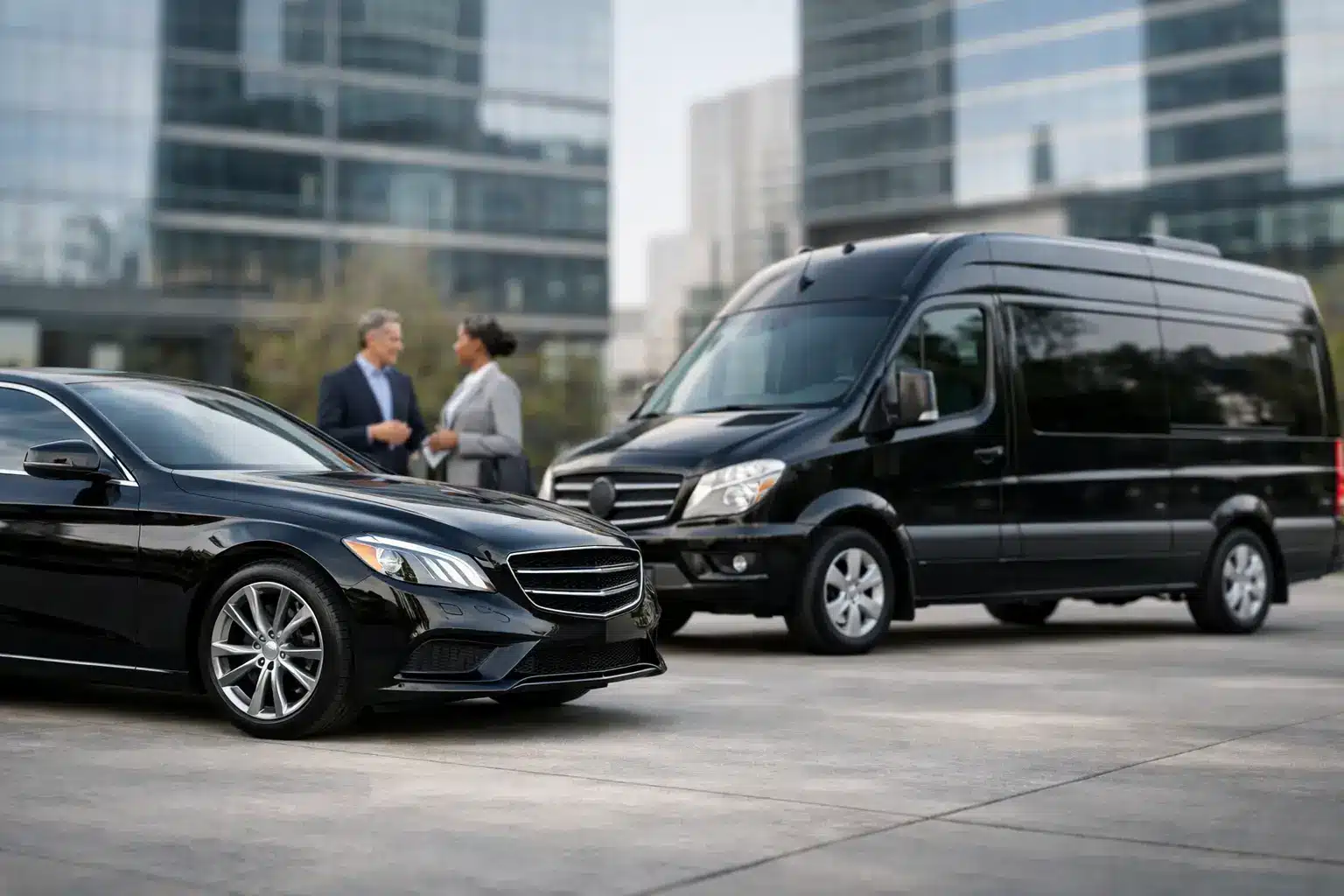
A vehicle choice can set the tone before the first meeting begins. When an executive assistant is coordinating a pickup at Teterboro, a board delegation is arriving at JFK, or a principal needs quiet time between Manhattan appointments, the question is not simply sedan or sprinter for executives. It is which vehicle protects the schedule, the working environment, and the guest experience.
A luxury sedan and an executive sprinter serve distinctly different assignments. Both can deliver the discretion, comfort, and professional chauffeur service expected of senior travelers. The right selection comes down to the number of passengers, the amount of luggage, the need for in-transit collaboration, and the impression the arrival needs to make.
Sedan or Sprinter for Executives: Start With the Assignment
A sedan is the natural choice when the journey centers on one principal or a small executive party. It provides a refined, quiet cabin where a traveler can take a call, review briefing materials, or simply reset after a flight. For airport transfers, point-to-point meetings, and individual VIP movements, a luxury sedan offers a composed, low-profile experience without excess space or complexity.
An executive sprinter is designed for a different kind of movement. It gives a group room to travel together without compromising comfort, personal space, or luggage capacity. This is especially valuable for leadership teams, clients, family offices, production teams, diplomatic delegations, and event guests who need to remain coordinated from arrival through departure.
The distinction matters because splitting a group among multiple vehicles can create avoidable variables. Cars can encounter different traffic patterns, passengers can arrive separately, and the host or executive assistant must manage more moving parts. One executive sprinter keeps the party, itinerary, and chauffeur communication together.
That does not mean a sprinter is automatically the premium choice. For a solo CEO traveling from an FBO to a Midtown hotel, a sedan often feels more appropriate. Premium service is not about selecting the largest vehicle. It is about selecting the vehicle that fits the mission precisely.
When a Luxury Sedan Is the Better Executive Choice
Choose a sedan when privacy, efficiency, and understated presentation carry the most weight. A sedan is particularly well suited to a principal traveling alone, an executive and one colleague, or a VIP guest who prefers a calm, intimate cabin.
For an airport transfer, the sedan experience is direct and controlled. The chauffeur manages the route, monitors the schedule, assists with luggage, and provides a polished arrival without drawing unnecessary attention. After a long flight into Newark Liberty, LaGuardia, or JFK, that simplicity can be more valuable than additional passenger capacity.
A sedan also works well for tightly scheduled Manhattan days. When a traveler has consecutive meetings in Midtown, the Financial District, and an evening dinner reservation, the vehicle remains an elegant extension of the itinerary. The cabin supports focus between stops while the chauffeur handles curbside timing, traffic conditions, and pickup coordination.
There is a practical limit. Even a generous luxury sedan is not designed to comfortably accommodate a full team and their luggage. Trying to place three passengers with multiple large suitcases in a sedan can compromise the very experience the reservation was intended to deliver. In that case, an SUV or executive sprinter should be considered instead.
The sedan advantage: discretion without excess
The strongest case for a sedan is not simply its size. It is the quality of the environment. A professional chauffeur, a well-appointed cabin, and a direct route create the conditions for an executive to arrive prepared rather than depleted.
For sensitive travel, the smaller passenger count can be an advantage as well. A private conversation remains private. A principal can work without the distractions of a larger group. And for corporate guests who value a traditional executive arrival, a sedan communicates confidence without spectacle.
When an Executive Sprinter Is the Better Choice
An executive sprinter becomes the clear choice when the party needs to travel as one unit. It is not merely a larger vehicle. It is a mobile executive environment with the space required for people, luggage, and coordinated movement.
Consider a team arriving for a board meeting with carry-ons, presentation materials, and checked luggage. Or a group of international visitors traveling from the airport to a hotel before a full day of appointments. A sprinter avoids the friction of dividing passengers, assigning luggage, and waiting for multiple vehicles to assemble at each stop.
The cabin also supports a more social and collaborative trip. Colleagues can discuss the day ahead, a host can brief guests en route to an event, and a family office can keep its principals and support staff together. The value is operational as much as it is physical.
For high-profile events, an executive sprinter can improve the arrival sequence. Guests disembark together, the chauffeur manages one secure pickup point, and the organizer has fewer schedules to reconcile. This is useful for corporate dinners, roadshows, investor meetings, fashion and entertainment events, and private aviation transfers.
Capacity is only part of the equation
Luggage is one of the most common reasons a sedan reservation should become a sprinter reservation. A party of five may sound manageable until each traveler has a checked bag, a carry-on, and equipment. The right vehicle should accommodate those items cleanly, without crowding the cabin or forcing last-minute adjustments.
Timing is another factor. A sprinter is ideal when a group must arrive at the same entrance at the same time. For a delegation with a fixed meeting start, one vehicle can reduce coordination risk. The chauffeur has one route, one arrival plan, and one group to account for.
There are trade-offs. A larger vehicle may be less convenient for certain compact pickup locations or a very short solo transfer. It can also be more vehicle than a small party requires. A well-managed chauffeur service will ask the right questions before recommending it, rather than treating capacity as the only measure of suitability.
Questions an Executive Assistant Should Ask Before Booking
The best reservations begin with a clear picture of the day. First, confirm the exact passenger count, including assistants, security personnel, or hosts who may join the movement. Next, account for luggage honestly, especially after international flights or when attendees are carrying materials for a presentation or event.
Then consider what must happen inside the vehicle. If the principal needs a quiet call, a sedan offers the most private setting. If the group needs to review logistics together or travel alongside clients, the executive sprinter provides more useful space.
Finally, think beyond the airport or first pickup. Will the same vehicle remain on standby for multiple meetings? Will the group make several hotel, restaurant, or venue stops? Is there a narrow curbside location where a smaller vehicle would be easier to position? These details influence the recommendation and prevent a vehicle change when the itinerary is already underway.
For recurring corporate travel, consistency is equally valuable. The same standards should apply whether the itinerary begins in New York City or continues across a multi-city program. NYC Drivers coordinates executive transportation with professional, discreet chauffeurs and 24/7 dispatch support, helping travel managers maintain one clear standard of service across complex schedules.
The Best Choice Is the One That Removes Friction
A sedan is often the right answer for a focused, private executive movement. An executive sprinter is often the right answer for a group that needs to stay together, carry significant luggage, or use travel time as part of the working day. Neither choice is universally better.
What matters is that the vehicle supports the people inside it. Give the chauffeur team the full itinerary, passenger count, luggage profile, and any privacy or timing requirements before the reservation is confirmed. That small step turns transportation from another detail to manage into the quiet, dependable part of the day your executives should never have to think about.
Leave a Reply